A Reading Corner in a Shared Room
A reading corner in a shared room can feel distinct without a wall: use sightlines, a defined footprint and a dedicated light to shape a calm place.
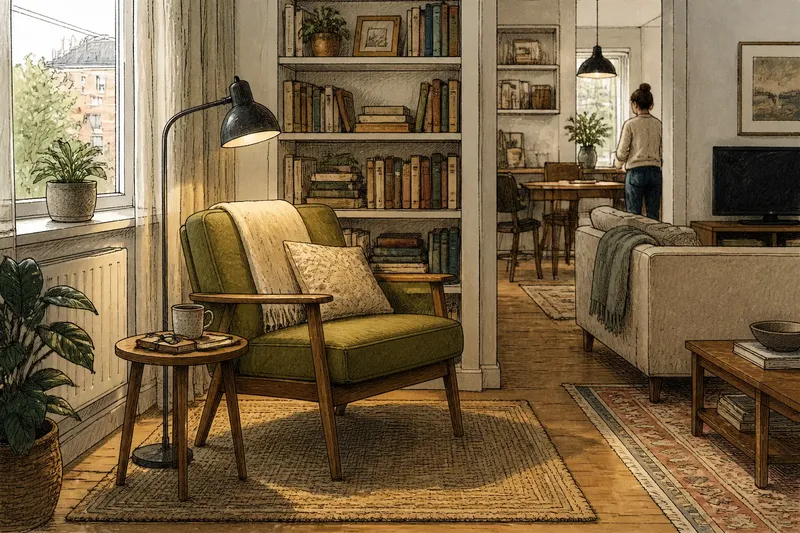
You settle into the armchair with a book, but the television flickers in your peripheral vision and someone needs the table behind you. A reading corner in a shared room does not need a partition to feel separate. It needs a position that limits distractions, a clear footprint and a light source that belongs to the reading place.
Those three choices work together. A chair turned away from the busiest view may still feel exposed if it sits in the middle of a walkway. A rug can mark a spot, but without useful light it is only a patch of floor. Compare a window-side perch, a corner arrangement and a compact seat near the room’s centre, then choose the one that fits the room’s daily traffic.
Start with sightlines
Stand where a reader might sit and look outward, rather than planning only from the doorway. What fills the direct view: a television, the kitchen, the front door, or a relatively quiet wall? Also notice movement in the edge of your vision. People crossing behind the chair can be more distracting than a visible but still object in front of it.
Try turning a chair a little before moving furniture around. An angled seat can keep a shared screen outside the direct view while leaving the reader connected to the room. If the only possible position faces the room’s busiest zone, a low bookcase or the back of a sofa may soften that view. Keep the sightline open enough for conversation and awareness of other people; the aim is a calmer orientation, not isolation.
A useful position also lets the reader look up without staring directly into a doorway or someone else’s work surface. In a living room, that may mean facing a bookcase rather than the television. In a bedroom shared with a desk, it may mean turning towards a window or a plain stretch of wall. Choose the view that stays least active during the hours the chair will be used.
Three placement options
Window-side seat
A chair near a window suits someone who enjoys daylight, a view outside and a reading place that feels connected to the room’s perimeter. The window gives the seat a natural orientation, while a small side table can hold a book and reading glasses. This arrangement often needs little visual separation because the wall and window already give the chair a clear backdrop.
Check how daylight changes across the day. A bright window may create glare on a tablet or make a page hard to see, and a nearby radiator or curtain may limit where the chair can go. Leave enough room for the window to open and curtains to move freely. If the view is busy or the window brings frequent activity into the reader’s direct line of sight, another position may feel more settled.
Corner arrangement
A corner suits a reader who wants a stronger sense of enclosure without building a screen. Place the chair so one side faces a wall, then add a floor lamp and a narrow table within the same small zone. The room’s existing edges do much of the defining, and the chair is less likely to drift into the route between shared activities.
Mind the approach. A chair wedged between a wardrobe and a wall may look tucked away but feel awkward to enter or leave. Avoid blocking doors, cupboards and drawers that other people use. If the corner is dark, choose a dedicated lamp rather than relying on a distant ceiling fitting.
Central perch
A seat near the centre suits a room with limited perimeter space or a reader who wants to stay socially present. The back of a sofa can provide a partial boundary, and a small rug can make the chair’s footprint legible from across the room. This option is flexible, but it asks more of the layout: the reading place must not interrupt the shared route or claim a surface everyone needs.
Use the chair’s orientation to establish a pocket of attention. Turn it towards a quieter wall or a bookcase, and avoid lining it up with a television or the main passage. If the chair has to be moved for meals, games or visitors, make its usual position obvious with the rug or lamp so it can return to the same spot.
Mark the footprint
Think of the reading corner as a small arrangement, not just a chair. It may include a seat, a place to put a drink, a lamp and a modest boundary underfoot. A rug is one option; a side table beside a floor lamp can also make the area feel intentional. Keep the pieces close enough to work as a set, but do not fill every gap with another object.
Test the footprint in the room before choosing accessories. Imagine a shared living room where a chair currently sits beside the main route to the kitchen. You turn it towards a bookcase, move it a little clear of the route and add a small rug under its front legs; the expected visible result is a seat that reads as a separate destination while people can still pass without weaving around it. If the rug’s edge catches a door or crosses a busy path, adjust the arrangement or skip the rug.
Not every reading corner needs a screen, basket, cushion and matching table. Those extras can crowd a small room and make ordinary cleaning harder. Keep what supports the reader’s habits: perhaps one book basket, perhaps nothing beyond a lamp and a comfortable seat. The boundary should clarify the place, not turn it into a miniature room.
Choose a distinct light
A reading light should be recognisably part of the reading place and suitable for the task. A floor lamp beside the chair gives a clear visual marker; a table lamp works when a side table is already useful. An adjustable head can direct light towards the page rather than the eyes or the person sharing the room. A lamp that also provides gentle background light may help the corner feel less like a bright spot in an otherwise dim room.
Position matters more than matching finishes. A lamp behind the reader may cast a shadow over the page, while a bare bulb in the direct view can feel harsh. Consider whether the reader holds a paper book, uses an e-reader or switches between them, and choose a shade and adjustable direction accordingly. For any lamp or fitting, follow the maker’s instructions and the relevant local requirements.
If the room already has several lamps, make the reading source distinct through placement rather than adding another decorative object. Put the useful light beside the reading seat and let the rest of the room keep its own lighting. That separation makes it easier to tell which light serves the task, and which simply brightens the shared space.
Which arrangement fits you?
Is a window seat best for daytime reading?
It can suit a reader who likes natural light and an outward view, provided the window does not create distracting glare. Check the position at the time of day the seat is most likely to be used.
Can a reading corner work without a rug?
Yes. A lamp, chair and side table can define the footprint without anything underfoot. A rug is helpful only if it fits the room’s circulation and stays clear of doors.
How do I keep the chair out of the main route?
Watch how people move between the room’s shared destinations, then place the chair beyond that line and angle it towards a quieter view. If the route still feels pinched, try a different placement rather than adding a screen.
What should I choose if the room is very small?
Prefer an arrangement that uses an existing edge, such as a window or corner, and limit the pieces to a seat and a useful light. A compact table is worthwhile only if it does not obstruct access or take a shared surface away from others.
Make the choice
Choose the window-side seat if daylight and a view are its main pleasures. Choose the corner if a more sheltered feeling matters and the approach stays clear. Choose the central perch if the reader wants to remain part of the room and there is space to protect a small footprint. In each case, judge the arrangement from the seated position and from the paths other people use.
A reading corner in a shared room works best when its boundary is easy to read and easy to live with. Before buying anything, move the chair, observe the sightline, and see whether the chosen light reaches the page without dominating the room. A small adjustment to orientation may do more than another accessory.